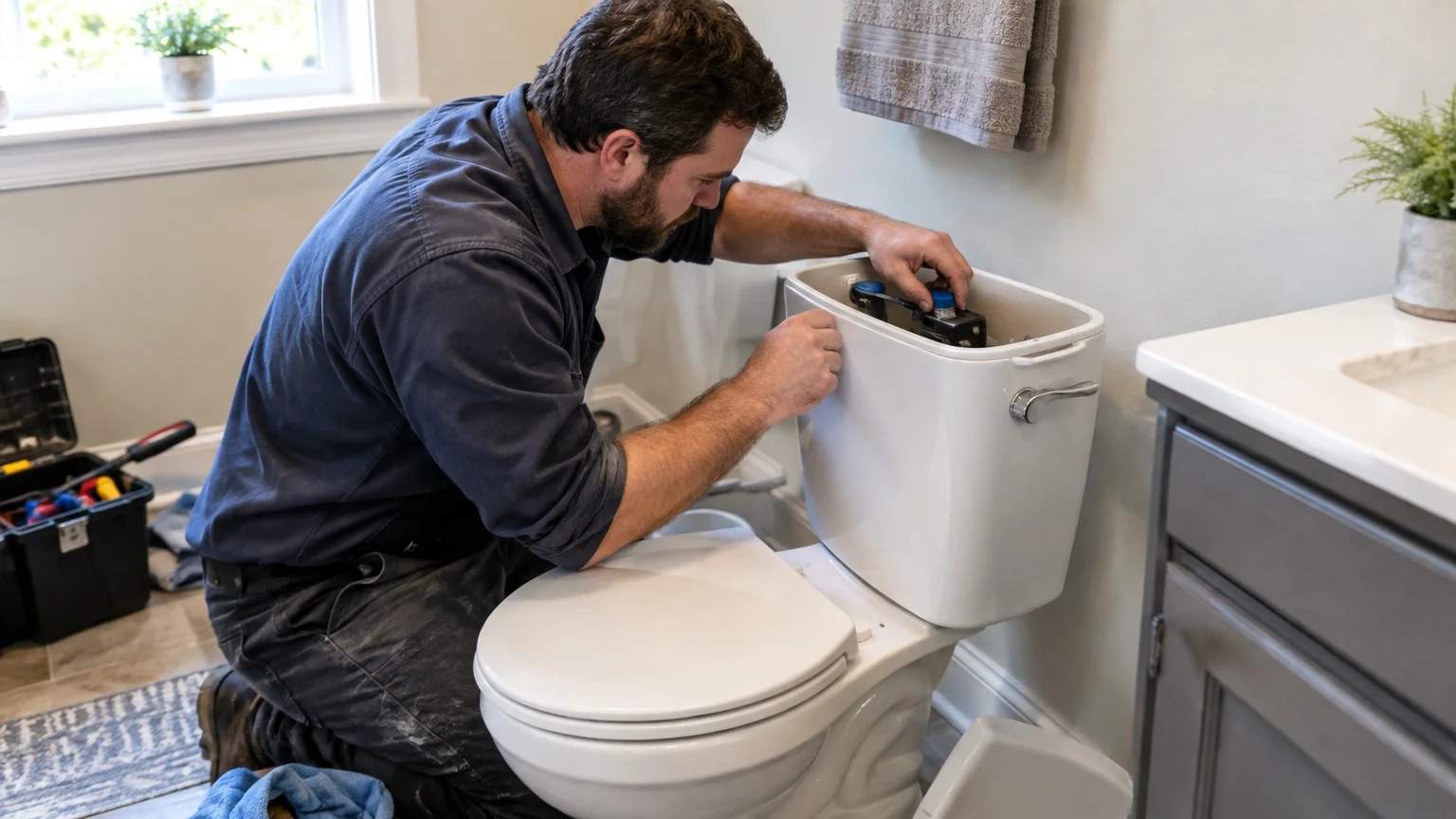
A toilet not flushing fix often starts with the handle, chain, tank water level, and flapper. A small clog may need careful plunging. Repeated clogs, leaks, or a weak flush can point to damaged parts or a deeper drain problem. Safe checks help, but some faults need professional repair.
Why is my toilet not flushing properly?
A toilet may not flush because the tank lacks water, the handle is loose, the chain is off, or the flapper is worn. A partial clog can also stop water from moving through the bowl. The right fix depends on whether the trouble starts in the tank or below the bowl.
The tank holds water for the flush. When you press the handle, it lifts the flapper. The flapper is the rubber seal over the flush valve. Water then rushes into the bowl and moves waste through the trap and drain. If one part fails, the toilet may flush weakly, keep running, or not flush at all.
How do the toilet tank, flapper, and flush valve work together?
The handle connects to a small chain or rod. That part lifts the flapper. The flush valve is the opening below the flapper. It lets tank water enter the bowl. After the tank empties, the flapper should close and the fill valve should refill the tank.
A loose chain may not lift the flapper high enough. A stretched or damaged flapper may let water leak into the bowl. A worn fill valve may not add enough water for a strong flush. These are common causes of toilet repair problems in homes, rentals, and small businesses.
What causes a weak or failed flush?
Low tank water can reduce flush power. The water should usually reach the marked fill line inside the tank. A broken handle, bent lever, or loose chain can also stop the flush valve from opening. Mineral buildup may narrow the holes under the bowl rim and reduce water flow.
A clogged trap is another common cause. The trap is the curved passage inside the toilet that holds water and blocks sewer gases. If paper or another item blocks it, the bowl may drain slowly or rise during a flush. A toilet bowl fill valve repair may help when the tank does not refill, but it will not clear a clog.
What can I check before calling a plumber?
A homeowner can safely check the handle, chain, flapper, tank water level, and visible leaks. These checks do not require removing the toilet or touching electrical equipment. The water supply valve should be easy to reach. Turn it off if the bowl begins to rise.
First, lift the tank lid and press the handle. Watch the chain and flapper. The chain should lift the flapper without holding it open. If the chain came loose, it may fit back onto the handle arm. If the handle moves freely without lifting anything, the handle or tank lever may need repair.
How can someone check the fill valve and flapper?
Check whether the tank fills to its marked line after flushing. If the tank stays low, the fill valve may be dirty, worn, or set wrong. Repairing a toilet fill valve may restore the water level. Close the supply valve before removing any part.
Look for water moving from the tank into the bowl when the toilet is not in use. This often means the flapper does not seal. A homeowner may clean the seal area and check for damage. A cracked, warped, or hard flapper usually needs replacement. This is a simple DIY toilet repair when the shutoff valve works and the part is easy to reach.
How should a plunger be used?
A flange plunger works best for a toilet. Its lower lip fits the drain opening. Add enough water to cover the rubber cup, then place it over the opening. Push down gently first to make a seal. Follow with several firm, steady strokes.
Stop if the water rises near the rim. Do not keep flushing, and do not use harsh drain chemicals in the toilet. Chemicals may splash back and damage parts. If plunging does not improve the drain, a toilet auger may be safer than repeated force. A professional should handle a blockage that returns soon after clearing.
When does a toilet flushing problem need professional repair?
Professional toilet repair is needed when the toilet overflows, leaks at its base, clogs again and again, or flushes poorly after safe checks. A plumber can check the fixture, drain path, and nearby pipes. This can stop a small toilet fault from causing water damage.
A leak around the base may mean the seal between the toilet and drain has failed. Water under the toilet may damage the floor or cabinet below. A crack in the bowl or tank also calls for quick replacement. Do not try to patch cracked porcelain as a lasting repair.
What signs point to a deeper blockage or sewer-line issue?
A deeper drain problem may affect more than one fixture. Slow sinks, bubbling drains, bad smells, or water rising in a shower during a flush can signal a shared drain issue. These signs differ from a simple flapper or handle fault.
Repeated clogs may also point to a pipe problem, an object in the drain, or a sewer-line fault. Emergency Plumbing may be needed when wastewater backs up, the toilet overflows, or several fixtures stop draining. A plumber can trace the problem without repeated flushing that may spread water through the home.
A toilet problem does not usually explain a suspected gas leak. If someone smells gas, they should leave the area and avoid switches and flames. They should contact the gas utility or emergency services. Questions about how to test for gas leaks need care. Never test a suspected leak with a flame.
When should a toilet be repaired or replaced?
Repair is often right when the issue is a handle, chain, flapper, fill valve, or flush valve. Replacement may make more sense when porcelain is cracked, parts fail often, or the fixture no longer clears the bowl well. The best choice depends on the toilet’s condition, fit, and water use.
Plumber Keller TX helps homeowners, landlords, and businesses decide whether repair or replacement fits the property. A local fixture plumber can also check nearby supply lines, shutoff valves, and floor damage before finishing the work.
How can you prevent future toilet flushing problems?
Regular care helps prevent weak flushes, leaks, and avoidable clogs. Property owners should not flush wipes, paper towels, hygiene products, grease, or other items that do not break down like toilet paper. Children should not use the toilet to dispose of toys or small objects.
Check the toilet for leaks during routine cleaning. Listen for water that keeps running after the tank fills. Look inside the tank when the flush becomes weak. Early attention can reduce water waste and lower the chance of damage around the fixture.
What maintenance helps protect a toilet?
Useful habits include:
- Test the handle and chain when the flush feels weak.
- Keep the tank water near its marked fill line.
- Replace a damaged flapper before the toilet runs constantly.
- Use a flange plunger for small, fresh clogs.
- Keep the shutoff valve reachable and free from rust.
- Arrange repair when leaks, smells, or repeat clogs appear.
Low water pressure can affect some plumbing fixtures, but it is not the only cause of a poor toilet flush. A weak toilet may have a clogged rim, worn tank parts, or a drain restriction. If several fixtures have low pressure, the property may need a wider plumbing check.
Should a toilet be repaired or replaced for better water use?
A repair may restore normal operation without changing the fixture. Replacement may help when an older toilet has repeated faults or poor flushing power. A plumber can check the available space, supply connection, drain fit, and household needs before installation.
Plumber Keller TX provides fixture guidance for properties in and around Keller, including Old Town Keller and Hidden Lakes. Nearby communities such as Southlake, North Richland Hills, Watauga, and Roanoke may also need help with fixture problems. Professional help is useful for commercial restrooms, rental properties, and toilets with hidden leaks. Good maintenance protects floors, walls, and connected plumbing.
Key takeaways
- Check the handle, chain, flapper, and tank water level first.
- Use a flange plunger gently and stop if the bowl starts rising.
- Repeated clogs, leaks, and overflows can signal deeper damage.
- A cracked fixture should be replaced, not patched as a lasting fix.
- Contact a professional when safe checks do not restore normal flushing.
Frequently Asked Questions
How do you fix a toilet that keeps running?
Check whether the chain holds the flapper open or the water level sits too high. A worn flapper, fill valve, or handle can keep water moving into the bowl. Closing the supply valve can stop the flow for a short time, but damaged parts may need running toilet repair.
Why does a toilet keep running after the tank fills?
A toilet usually keeps running because the flapper does not seal, the fill valve does not shut off, or the tank water level is too high. Cleaning the seal area may help for a short time. If water still enters the bowl, a plumber should inspect the inside parts.
Can a blocked toilet cause an overflow?
Yes. A blockage can stop water from leaving the bowl, so another flush may push water over the rim. Stop flushing when the level rises and close the supply valve. Careful plunging may clear a small blockage. Persistent or repeated blockages need professional inspection.
What causes low water pressure in a house?
Low pressure may result from a closed valve, a clogged screen, damaged pipes, a failing pressure regulator, or a wider supply issue. A weak toilet flush may have another cause, such as a blocked trap or worn tank part. A plumbing inspection can separate these problems.
Conclusion
The best toilet not flushing fix depends on the failed part or blocked passage. Simple checks can find a loose chain, low tank water, or worn flapper. A homeowner does not need a professional for safe checks and basic upkeep. Leaks, cracks, overflows, and repeated clogs need skilled attention. Contact us to arrange help from Plumber Keller TX.